Rockford Infrared Asphalt Solutions
You require a Rockford asphalt contractor possessing local soil knowledge and freeze-thaw expertise, providing complete services from concept to completion. Require soil testing, compaction testing, properly designed water management, correctly engineered mixture formulations, temperature control, and confirmed density measurements. Insist on detailed work specifications, itemized costs, comprehensive project schedules, weather contingency protocols, and regulation-compliant traffic safety measures. Validate Illinois licensure, insurance, OSHA-trained leadership, performance-based guarantees, and history with equivalent installations. Obtain references, long-term performance data, and change-order history to secure enduring performance-more awaits ahead.
Critical Findings
- Pick a reputable Rockford expert with established cold weather experience, established municipal connections, and fast-responding crews for weather-related and emergency services.
- Offer full-service solutions ranging from design to striping for commercial, residential, and municipal projects, incorporating ADA standards, traffic control, and evening work solutions.
- Require comprehensive QA/QC: covering ground density testing, drainage design, compaction validation, and inspection checklists before, during, and after the paving process.
- Insist on detailed estimates containing detailed specifications including quantities, mix designs, thickness requirements, project milestones, weather policies, pricing per unit, exclusions, and milestone-based billing.
- Validate credentials and trustworthiness: Illinois licensing, insurance and bonds confirmed by insurers, local references with 1-, 3-, and 5-year performance outcomes.
The Importance of Selecting a Local Rockford Asphalt Professional
Though large nationwide paving companies can look promising, a Rockford-based asphalt expert provides the detailed focus your project needs. You benefit from local expertise grounded in Rockford's here unique soil conditions, weather cycles, and local regulations, making sure your asphalt installation, mix selection, and compaction strategy match actual site conditions. Your contractor's established local connections facilitate permits and approvals, quality checks, and infrastructure planning, decreasing delays and corrections.
You get the advantage of immediate support. When weather changes occur or equipment problems surface, a close-by crew responds swiftly, adjusts schedules, and protects fresh lifts before density or surface texture are compromised. If you encounter emergency maintenance issues-surface damage, deterioration, or joint failures-a local team secures the area, restores ride quality, and reduces liability promptly. You receive accountability, clear communication, and results that maintain quality throughout the years in Rockford.
Full-Service Paving Solutions for Homes, Businesses, and Municipal Projects
From initial design to final striping, we provide a complete paving program designed for your specific needs and budget-ranging from a driveway, retail lot, industrial yard, or city roadway. We engineer paving solutions to meet traffic loads, climate, and life-cycle targets, then deliver on schedule with minimal disruption.
For residential properties, we install durable, high-quality driveways, offering green solutions including permeable driveways that minimize runoff and align with local stormwater requirements. For commercial clients, we deliver new construction, mill-and-overlay, crack sealing, sealcoating, ADA-compliant improvements, phasing plans, and night work to ensure customer access. For municipal projects, we manage arterials, alleys, and bike paths with detailed specifications, traffic control, and pavement markings that comply with MUTCD standards. You'll obtain thorough documentation of materials, compaction reports, and warranties that secure your investment.
Why You Need Effective Site Preparation and Drainage Solutions
You preserve your pavement investment by beginning with thorough soil evaluation, verifying structural capacity, density requirements, and cold weather vulnerability. We level to required slopes and tolerances, setting elevations that push water away from facilities and pavement perimeters. With properly designed drainage-subsurface bases, border drains, and properly sized inlets-you eliminate ponding, minimize freeze-thaw damage, and maximize service life.
Soil Evaluation: The Basics
Before proceeding with asphalt procurement, an in-depth soil analysis creates the basis for pavement that stands the test of time. You need to know the composition below your project, how it performs under load, and how it will sustain the base course. Our process starts with soil sampling to determine soil type, moisture content, and soil plasticity. This information determines our approach regarding soil stabilization, excavation, or geotextile enhancement.
Next, we evaluate soil strength and consistency through density testing, verifying that specified density levels are met and consistent across the site. We inspect soil consistency, detect soft spots, and confirm material depths match requirements. Correct grade levels are monitored to prevent inconsistent support and early failure. With precise measurements, properly maintained tools, and comprehensive documentation, you get a stable, consistent subgrade prepared for durable asphalt performance.
Smart Water Management
Once the subgrade stability is verified, water management becomes the next critical factor. Proper grading is required to create effective water flow away from structures and guides water to engineered drainage systems. We set proper elevations to maintain proper crossfall, prevent water accumulation, and safeguard pavement courses from excess moisture that leads to accelerated wear and deterioration.
We implement drainage structures that align with your site's hydrology. Drainage components efficiently channel water, while vegetative swales regulate, purify, and permeate flows to minimize peak discharge. Where practical, permeable paving adds storage and infiltration, decreasing load on storm sewers and optimizing winter performance by reducing surface ice. We select geotextiles, base gradations, and outlet locations to keep fines from migrating. The result: longer pavement life, fewer callbacks, and predictable maintenance.
Professional Guidelines for Installing Long-Lasting, Smooth Asphalt
Although every project site is unique, durable , smooth asphalt requires careful preparation and tight process control. We deliver consistent results by validating subgrade strength, exact grading, and target densities prior to paving. Select the right mixture selection for traffic loading, environmental factors, and course thickness; we confirm correct binder grade and aggregate gradation to minimize segregation and surface rutting.
During placement, temperature control is non-negotiable. We consistently check temperatures across haul, mat, and screed to keep the mix within its ideal compaction window and prevent temperature-related defects. Implement established compaction methods-determine optimal rolling patterns, ensure roller compatibility with lift depths, and achieve density with calibrated equipment. Perform joint installation with properly aligned edges, tack application, and appropriate edge overlap to lock seams, prevent permeability, and create a smooth finished surface.
Extending Pavement Lifespan Through Sealcoating and Maintenance
Protect your investment and prevent oxidation with high-quality sealing treatment that repels harmful UV rays, moisture, and winter treatments. Prevent moisture penetration and foundation issues by treating developing cracks with elastomeric filling compounds customized for gap size and flexibility. We'll specify the right products and timing so your pavement performs longer, stays attractive, and minimizes maintenance costs.
Advantages of Sealcoating
Strategic sealcoat application, together with crack sealing and routine maintenance, safeguards your pavement from oxidation, UV exposure, moisture, and de-icing chemicals while prolonging service life. You get UV protection that minimizes binder breakdown, decreases raveling, and preserves asphalt flexibility under Rockford's freezing and thawing conditions. The sealed surface resists water intrusion, minimizing pothole formation and base destabilization.
Sealcoating offers a sleek, dark appearance that boosts visual appeal and line marking clarity. This treatment minimizes surface degradation from vehicles and plowing, decreasing lifecycle costs and extending rehabilitation timeframes. The enhanced surface enables faster snow melting, boosting safety during winter months. Scheduled treatments determined by vehicle load and climate factors enhance longevity and financial planning, maintaining your surface in prime condition longer.
Professional Crack Sealing
After sealcoating, thorough crack sealing targets the principal pathway for water infiltration and pavement deterioration. You prevent subbase erosion by clearing, selective routing, and treating cracks before moisture and deicing chemicals penetrate. Our team analyzes crack width, movement, and concentration to choose the optimal approach and materials.
When dealing with active cracks subject to thermal movement, we recommend polymer-modified hot-pour sealants with suitable overbanding for maximum flexibility and bonding. For low-movement, narrow cracks or cooler conditions, we deploy cold applied mastics that rapidly cure to reduce downtime. Proper surface preparation is essential: clean, dry surfaces with compressed air and controlled temperature application ensure proper adhesion.
You'll notice reduced raveling, fewer potholes, a smoother ride, and extended service life, reducing life-cycle costs while safeguarding your recent sealcoat investment.
Assessing Contractor Credentials, Experience, and Professional References
Before accepting your paving proposal, confirm that your Rockford asphalt contractor holds valid Illinois credentials (where applicable), appropriate liability and workforce protection, and any required bonds; then confirm these credentials straight with the insurer or issuing authority. Conduct formal license validation and request certificates of insurance with you as the certificate holder.
Review qualifications through a comprehensive portfolio evaluation: demand photographs of projects, detailed scopes, paving details, mix designs, and machinery lists. Ask for similar projects in Rockford's weather conditions, incorporating freeze-thaw performance and service performance at 1-, 3-, and 5-year intervals. Verify field supervision background-supervisor experience, OSHA qualifications, and manufacturer certifications.
Meticulously review references. Get in touch with property managers, owners, or local officials. Inquire about schedule compliance, site safety standards, change order patterns, achieved compaction density levels, storm water management effectiveness, and resolution of punch list tasks.
Clear and Transparent Project Planning, Estimates, and Communication
After thoroughly evaluating credentials and past performance, you deserve comparable attention to detail in how a Rockford asphalt contractor handles the planning, costing, and implementation of your project. Request a thorough written scope covering specifications, material compositions, measurements, traffic control, drainage adjustments, and disposal methods. Require clear cost breakdowns: unit costs, labor rates, equipment charges, setup costs, allowances, and limitations. Expect to get an comprehensive schedule showing milestones-subgrade prep, paving windows, compaction, cure times-and explicitly stated dependencies.
Define communication protocols before project kickoff. Designate one project lead, set meeting cadence, and specify issue escalation protocols. Put in place daily progress updates, written change-order procedures, and weather-delay criteria linked to schedule modification procedures. Verify QA/QC steps: density verification, yield checks, and completion checklists. Link payment schedules to measurable deliverables, not arbitrary percentages. This methodical process protects both budget and timeline.
Enduring Worth: Warranties, Service, and Maintenance Tips
While paving quality creates the foundation, lasting value comes from solid warranties, swift repairs, and consistent maintenance. You should obtain written warranty documentation that specifically details warranty coverage, workmanship details, materials, and coverage timeframes for base, binder, and surface courses. Link these specifications to measurable standards like density measurements and temperature logging.
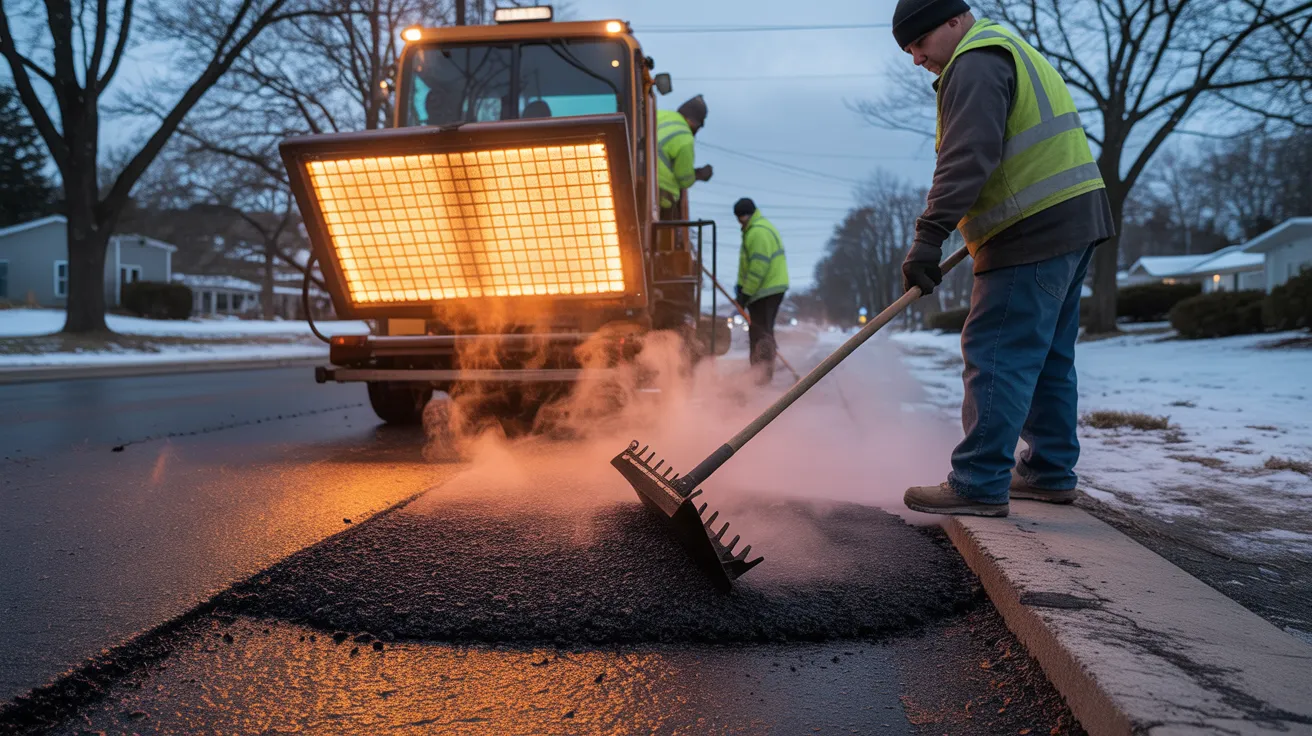
Handle surface damage promptly. Apply sealant to thin cracks under 1/4 inch, properly treat wider cracks, and patch potholes using well-bonded and compacted hot mix. Start sealcoating following complete curing, and prevent over-application.
Establish service intervals according to usage patterns, freeze-thaw cycles, and drainage conditions. Ensure proper edge reinforcement, maintain water collection points, and add compatible coatings. Schedule annual evaluations, carry out heat-based fixes when feasible, and document all maintenance activities to preserve warranty coverage.
FAQ
Which Permits and Zoning Approvals Do I Need for My Paving Project?
It's essential to obtain proper building and zoning permits and permission for modifications affecting shared spaces. Be sure to check proper permissions for driveway installations and utility placements. Confirm adherence to stormwater management, erosion control systems, and public roadway safety measures. Check and confirm zoning setbacks, lot parameters, and drainage requirements. Present comprehensive project plans, technical specs, and schedules. Hold off on starting until permits are approved and inspections are scheduled.
How Do Weather and Temperature Windows Affect Project Start Dates
Similar to a precision timepiece, weather conditions and temperature ranges dictate the starting window. You'll require dry conditions, consistent meteorological outlooks, and environmental and ground temperatures usually within 50-90°F. Colder seasons impose weather restrictions, increasing curing duration and delaying project initiation; extreme heat can mandate night operations to regulate mixture temps and ensure proper compaction. Precipitation threatens binder effectiveness and may create finishing defects, so we plan around weather events. We track weather patterns and local conditions to determine the earliest viable start date.
Are You Able to Meet ADA Requirements for Parking Lots and Walkways?
We provide comprehensive ADA compliance services for parking facilities and pedestrian paths. You'll receive regulation-conforming slopes, cross-slopes, and widths; appropriately placed accessible parking stalls with van-access aisles; regulation-standard signage and pavement markings; uninterrupted accessible routes from parking to entrances; and safety markers with tactile indicators at pedestrian crossings and curb cuts. We validate grades using laser levels, detail changes in level, and arrange inspections to fulfill all regulatory requirements while limiting interference.
How Are Old Asphalt Materials Recycled and Disposed Of?
Our closed-loop approach delivers optimal results: we perform cold milling of existing surfaces, separate and classify clean RAP for recycling and integrate it into new hot-mix meeting DOT gradation specifications. We carefully verify moisture content, binder properties, and contamination prior to batch processing. For millings reuse, we compact screened materials for base layers or low-volume surfaces, incorporating stabilizers when required. Non-conforming materials are sent to certified facilities with detailed tracking. We minimize transportation distances, implement dust control measures, and maintain detailed volume records to ensure regulatory compliance.
What Impact Will Construction Have on Neighboring Properties and Access During Work
Building activities will have a temporary effect on adjacent properties and accessibility, but you won't lose access; we'll organize operations to provide interim entry and visible pathways. To manage noise concerns, we employ sound reduction strategies: well-maintained tools, limited construction periods, and sound barriers where warranted. You'll receive advance schedules, delivery path diagrams, and coordinated delivery schedules to reduce traffic. We'll protect adjacent surfaces, suppress dust with water trucks, and keep ADA-compliant paths. Any driveway interruptions are short, scheduled, and well-documented.
Closing Remarks
Picking a reliable Rockford asphalt contractor ensures your project for lasting success and value. You'll benefit from precise grading, effective drainage, and ASTM-compliant installation that prevents wear and deterioration. Here's a compelling stat: timely sealcoating can increase pavement life by up to 50%, lowering lifecycle costs significantly. When you insist on detailed estimates, credentialed crews, and strategic maintenance plans, you secure your investment. Partner with a local expert— get quality, reliability, and professionalism from day one.